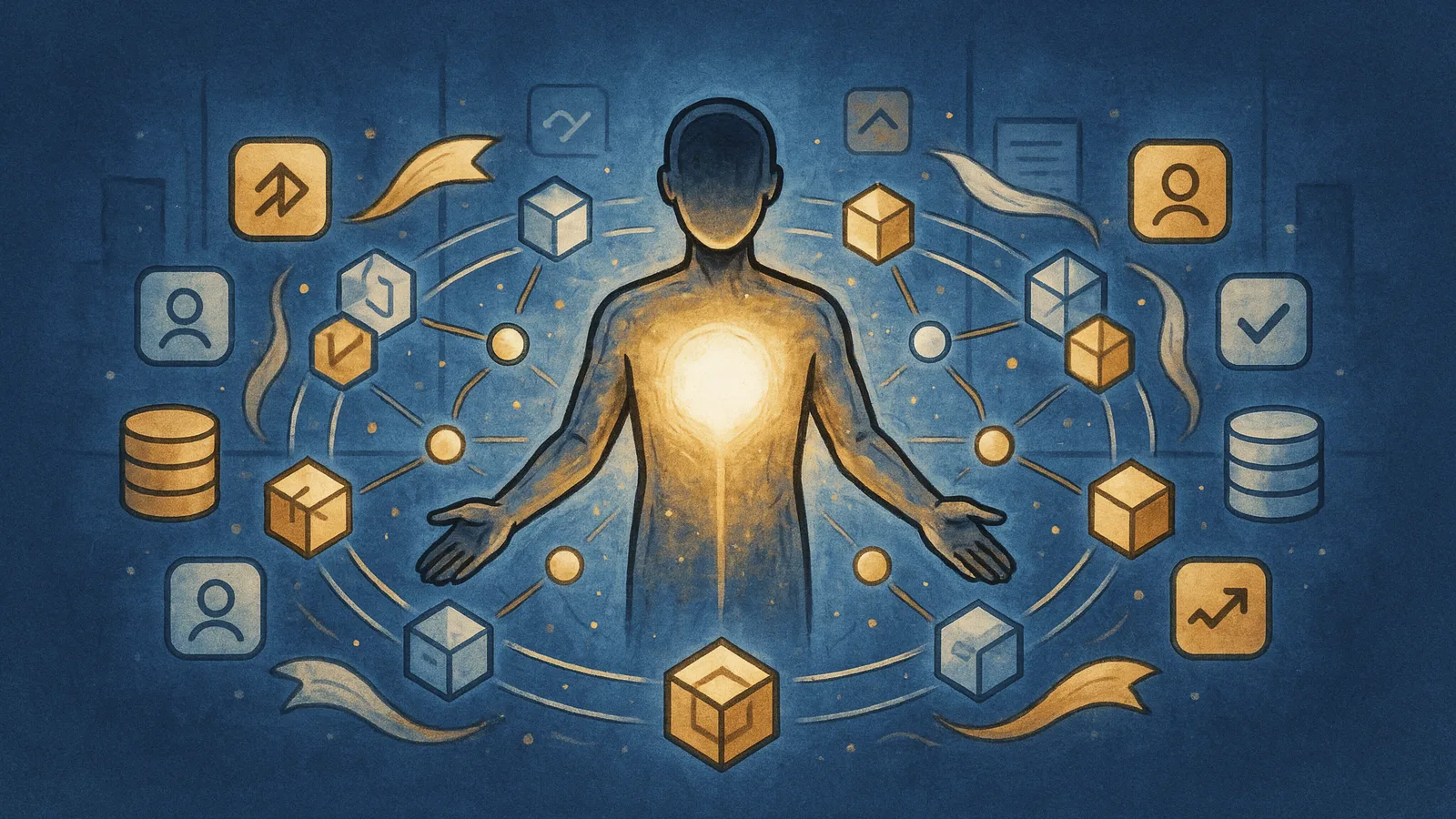
TL;DR: AI agents are autonomous, goal-driven software systems that perceive their environment, reason and plan, use tools, remember context, and take action across business systems with minimal human direction - unlike chatbots that only respond or RPA that only follows fixed rules.
AI Agents in 2026: Why This Term Suddenly Matters
AI agents are software systems you hand a goal to, not a script - and in 2026 they have crossed the line from AI that chats to AI that does. That shift is why the term suddenly dominates board decks and engineering roadmaps.
For most of the last two years, “AI” meant a chat window. You typed, it answered, and any real action stayed on your plate. Autonomous AI agents change the equation: they plan the work, call the systems, and execute the steps themselves. The assistant becomes an operator - and that single move, from advice to action, reframes what you can actually delegate to software.
I wrote this guide for the people making the adoption call: CTOs, founders, and Heads of Product or Operations who are technically literate but not writing the code themselves. You want a clear architecture picture and a defensible decision, not vendor marketing.
Most definitions you will find come straight from IBM, AWS, or Salesforce and quietly steer you toward their platform. This is a vendor-neutral pillar instead. It answers three questions: what AI agents actually are, how they work under the hood, and why businesses deploy them - so you can decide whether to build or buy.
What Are AI Agents? A Clear Definition
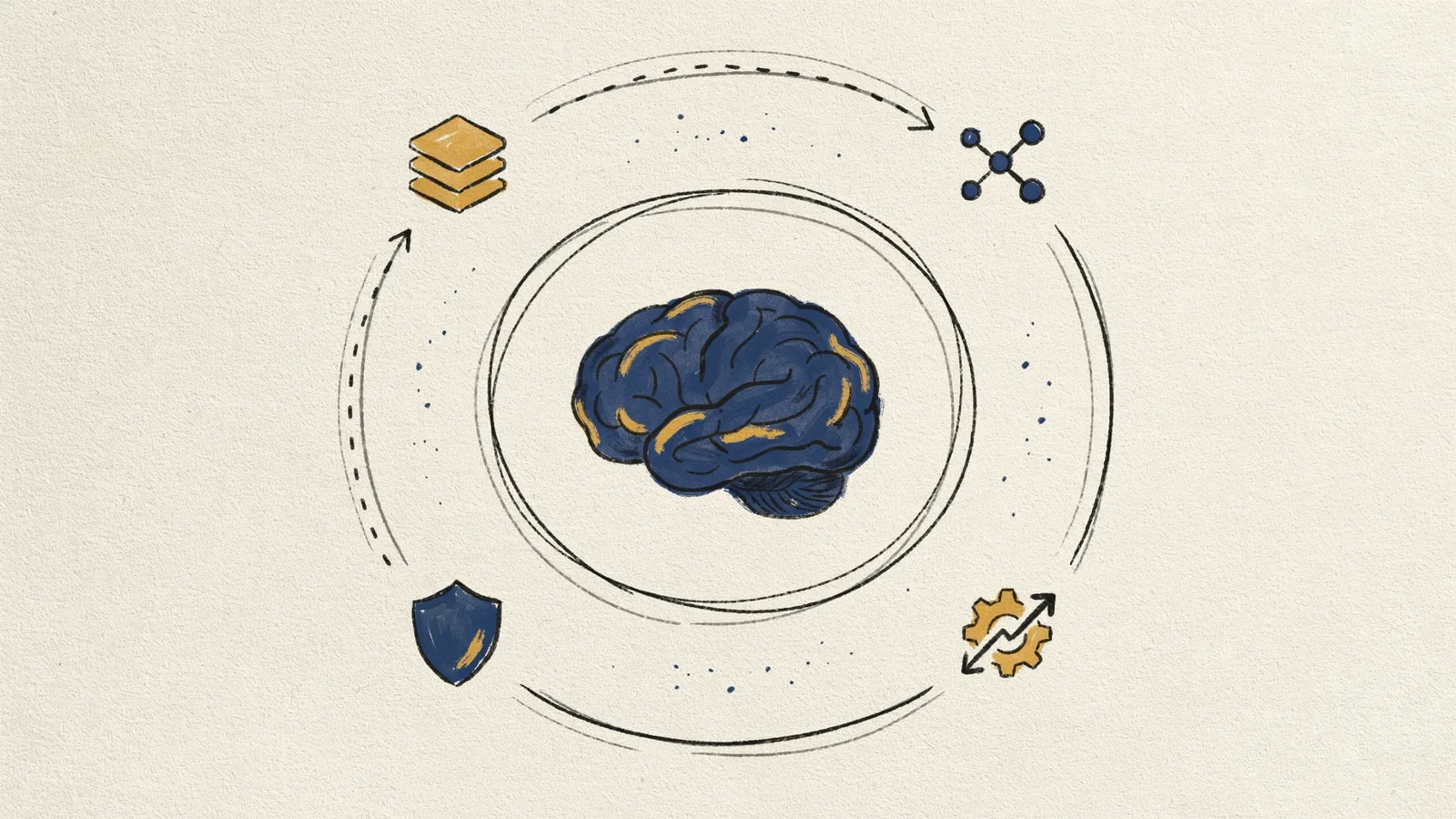
An AI agent is an autonomous, goal-driven software system that perceives its environment, reasons about it, uses tools, remembers context, and takes action to achieve an objective - with minimal step-by-step human direction.
The key phrase is goal-oriented rather than instruction-following. With a chatbot or a traditional script, you specify every step. With an agent, you specify the outcome - “resolve this refund request” or “reconcile these two data sources” - and the agent works out the sequence itself.
A common misconception treats the large language model as the agent. It is not. The LLM is the reasoning core - the part that plans and decides. The agent is the full system around it: the memory, the tool connections, the orchestration logic, and the guardrails that turn reasoning into real work.
That distinction matters because intelligent agents in AI operate across systems - APIs, databases, internal apps, and other agents - not inside a single chat box. The model thinks; the surrounding architecture acts. When people evaluate agents purely on which model is smartest, they usually miss where value and risk actually live.
AI Agents vs. Chatbots vs. RPA: The Difference That Matters
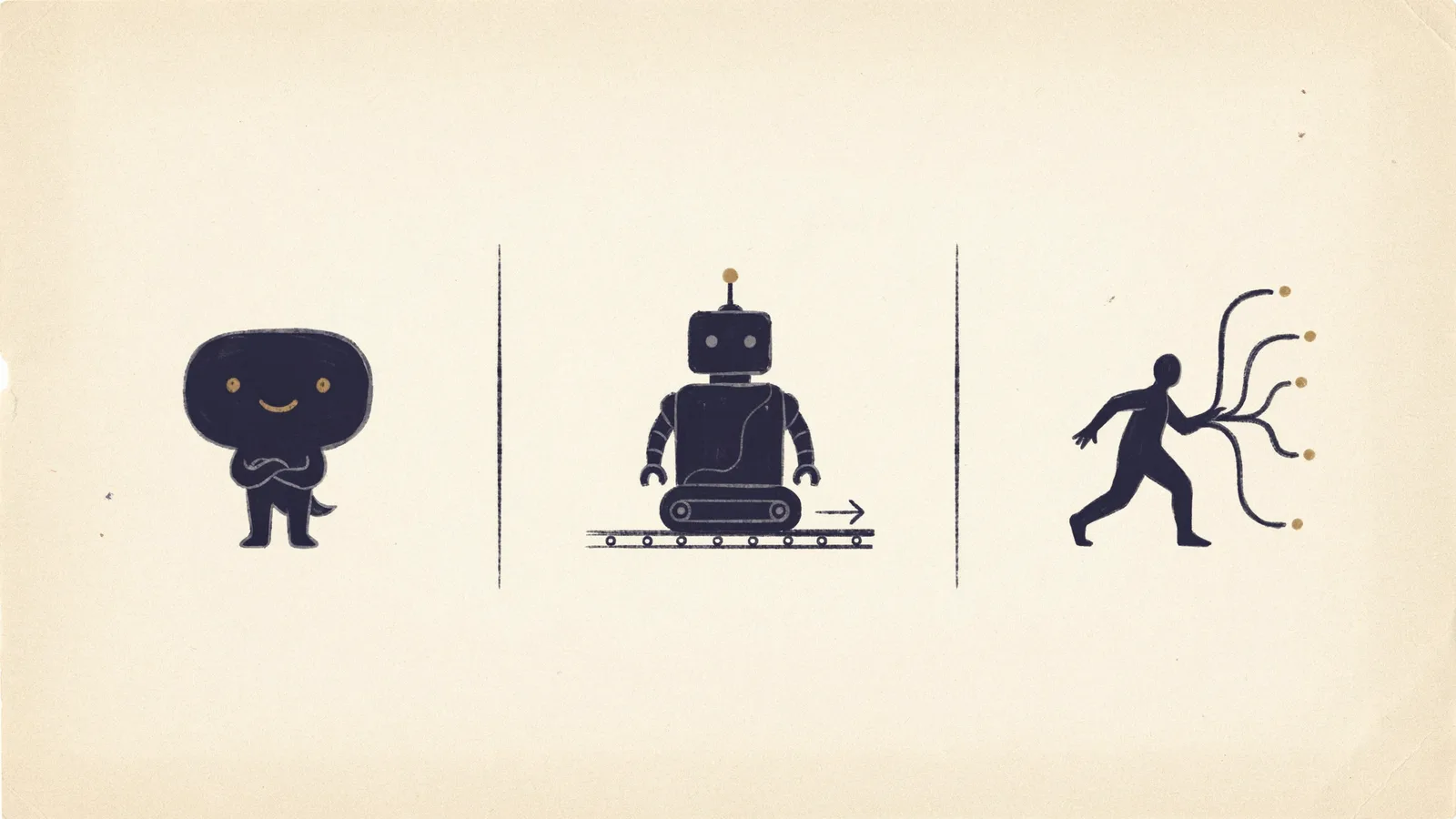
AI agents differ from chatbots because they pursue multi-step goals and take action, and from RPA because they reason and adapt instead of following brittle fixed rules. In short: chatbots react, RPA follows rules, and agents drive toward goals and adapt.
Chatbots respond. You ask a question, they generate an answer, and the interaction ends there. They do not pursue objectives across steps, and they do not touch your systems unless a human copies the output somewhere.
RPA and traditional automation do act - but only along a predefined path. The moment a form field moves, a process branches, or an edge case appears, the workflow breaks. I have watched teams spend more on maintaining rigid automation scripts than the scripts ever saved, because every process change forced a rebuild.
AI agents combine reasoning with real-time adaptation. When a step fails, the agent re-plans. When it hits ambiguity, it gathers more context and decides. This handles the messy, dynamic reality that rule-based automation never could.
| Dimension | Chatbot | RPA / Automation | AI Agent |
|---|---|---|---|
| Core behavior | Reactive | Rule-based | Goal-driven, adaptive |
| Handles ambiguity | No | No | Yes |
| Takes action in systems | No | Yes (fixed) | Yes (dynamic) |
| Breaks on process change | N/A | Frequently | Re-plans |
| Value ceiling | Low | Medium | High |
This distinction reshapes both the risk profile and the value ceiling. A chatbot that hallucinates produces a bad sentence. An autonomous agent that hallucinates can take a bad action in a live system - which is exactly why governance, covered below, becomes central rather than optional.
How AI Agents Actually Work: The Autonomous Action Loop
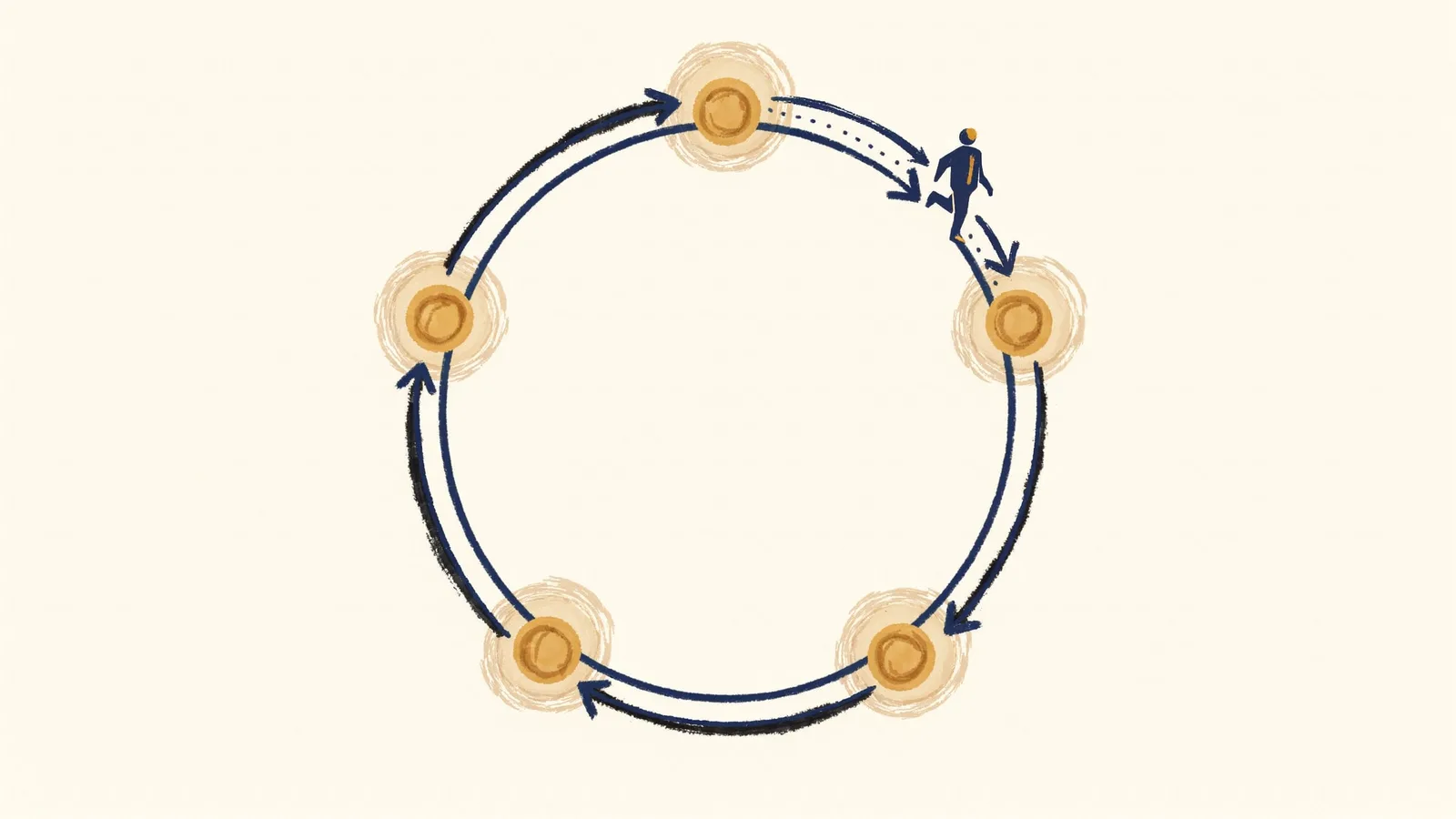
AI agents work through a continuous loop: they perceive inputs, reason and plan, act using tools, observe the results, and update their memory - then repeat until they reach the goal. This feedback cycle, not a one-shot answer, defines the mechanic.
Think of an agent as a system that runs iterations against a goal rather than returning a single response. Picture it less like a vending machine (one input, one output) and more like an employee working a task: check the situation, decide the next move, do it, see what happened, adjust. The four sub-sections below break down each stage in plain terms while keeping the architecture accurate.
Perception: Gathering Context and Inputs
Perception is how an agent ingests the raw material for its decisions: documents, API responses, database records, user requests, and current system states. Perception quality caps decision quality - garbage in, garbage out.
An agent handling a support case does not just read the customer’s message. It pulls the ticket, the CRM history, past orders, and the current account status before it decides anything. That fuller context separates a useful action from a confident mistake.
When agents underperform in production, weak perception often turns out to be the hidden cause. The model reasons fine - it simply never saw the data it needed.
Reasoning and Planning: Breaking Goals Into Steps
Reasoning and planning is where the model decomposes a high-level goal into an ordered sequence of sub-tasks, handles dependencies, and re-plans when a step fails. This is the cognitive engine of agentic AI.
Give an agent the goal “onboard this new client,” and the planning layer breaks it into: create the account, provision access, send the welcome sequence, schedule the kickoff. If provisioning fails, the agent re-plans instead of collapsing.
Here is the part teams underestimate: the orchestration layer - the “harness” around the model - often matters more than raw model intelligence. In practice, the harness determines real-world performance far more than model IQ does. A brilliant model with a weak harness produces an unreliable agent, while a modest model inside a well-built harness can carry serious workloads.
Tool Use and Orchestration: Taking Action in Real Systems
Tool use is the agent calling external capabilities - APIs, search, code execution, internal software, or other agents - and it is the single feature that turns “talking” into “doing.”
An agent without tools is just a chatbot with extra steps. Connect it to your billing API, your database, and your ticketing system, and it can actually complete work end to end.
Orchestration extends this to multi-agent systems: specialized agents coordinating on a shared objective. One agent researches, another writes, a third validates. Modern model providers increasingly support these agent teams directly, which is why multi-agent architectures moved from research demos to production patterns. When you build AI agents for complex processes, orchestration design becomes the core engineering problem. For a hands-on look at what that means in code, see our Claude Agent SDK guide.
Memory: Retaining Context Across Tasks
Memory lets an agent retain context across steps and sessions. Two layers do the work: short-term working memory holds the current task, and long-term persistent memory holds accumulated knowledge.
Working memory keeps the agent coherent within a single job - what it has done, what remains. Long-term memory enables continuity, personalization, and learning across sessions: it remembers a customer’s preferences, a prior decision, or a recurring exception.
Weak memory design ranks among the most common failure points I see in production agents. Without persistent memory, the agent restarts cold every session, repeats work, and forgets corrections - which quietly erodes trust until someone unplugs it. Memory architecture is not a nice-to-have; it carries the load.
Autonomous Action and Oversight Loops
Autonomous action means the agent observes the result of each action and adjusts - closing the loop - while human-in-the-loop checkpoints gate high-stakes moves. Autonomy and oversight scale together, not against each other.
After each action, the agent checks the outcome and decides its next move. That closed feedback loop lets it recover from failures without a human intervening on every step.
The autonomy horizon expands fast. METR’s research on task-completion length finds that the length of task an AI agent can handle unsupervised has roughly doubled every seven months, pushing reliable autonomous work from minutes toward multi-hour tasks. As that window grows, well-placed human checkpoints on irreversible or high-risk actions matter more, not less. For a deeper look at what “autonomous” actually means in practice, see our guide to the levels of AI agent autonomy.
The Main Types of AI Agents
The main types of AI agents range from simple reflex and rule-based agents to goal-based and learning agents, and from single-agent copilots to multi-agent systems - each suited to different business problems.
- Reflex / rule-based agents - React to a current input with a fixed response. They suit narrow, predictable tasks like triage routing.
- Goal-based agents - Plan toward an objective and choose actions accordingly. This is the workhorse category for most business automation.
- Learning agents - Improve over time by incorporating feedback and outcomes. They earn their keep where conditions shift and past decisions inform future ones.
- Single-agent copilots - One agent assisting a human inside a workflow, like a coding or research assistant.
- Multi-agent systems (agent teams) - Specialized agents dividing and coordinating a larger objective.
Mapping these to B2B reality: goal-based and learning agents power AI agents for automated customer service, resolving tickets end to end. Multi-agent systems handle complex data workflows and operations - reconciliation, reporting, multi-step onboarding. Single-agent copilots dominate software development, where coding assistants debug and iterate alongside engineers.
One practical warning on type selection: teams often reach for the most powerful, most autonomous option when a simpler agent would deliver more reliably. Task-specific agents win on reliability; general-purpose orchestrators win on flexibility. Start with the narrowest agent that solves the problem, prove it in production, and only add autonomy and coordination once the simpler version earns your trust. Over-engineering the agent type is one of the fastest ways to ship something that impresses in a demo and disappoints under real load.
Why Businesses Are Adopting AI Agents
Businesses adopt AI agents because they execute entire processes end to end, run 24/7, and shift cost from headcount toward cost-per-outcome. Adoption already looks mainstream, not experimental.
The trajectory is concrete. PwC’s 2025 AI agent survey reports that a majority of enterprises already run or actively pilot AI agents, and Gartner forecasts that agentic AI will feature in about a third of enterprise software applications by 2028, up from less than 1% in 2024. Those figures point to unusually fast uptake across enterprise software.
The core driver is simple: agents compress multi-step processes that previously required coordination across people and tools. The value is not “answers faster” - it is “work completed.”
A realistic ROI note, because I have seen expectations outrun reality. Agents deliver strong, measurable value on high-volume, well-scoped processes with clean data and clear success criteria. They disappoint when you point them at vague goals, messy inputs, or processes nobody fully understands. The technology is genuinely capable in 2026 - but value comes from disciplined scoping, not from deploying dozens of agents and hoping. The teams that succeed treat agents as systems to engineer, not magic to switch on.
Risks, Governance, and Oversight

AI agents introduce a new risk surface because they take autonomous actions with real system access - which demands identity management, monitoring, and clear accountability that most organizations have not yet built.
The governance gap is stark. SailPoint’s 2025 research on AI agent security found that a large majority of organizations already experienced AI-related security incidents, while only a minority govern agents as identity-bearing entities. An agent with credentials is effectively a non-human employee with system access, and few companies govern it that way.
The failure modes are specific: hallucinated actions (the agent does something confidently wrong), cascading errors (one bad step propagates through a multi-agent chain), and unclear accountability when no human owns the outcome. Autonomy raises the stakes of every mistake.
Treat agent governance as a design requirement, not a post-launch cleanup. Before an agent touches production, define its permission scope narrowly, log every action it takes, and set explicit human checkpoints on anything irreversible - payments, deletions, external communications. Give each agent its own scoped identity rather than a shared admin credential, so you can audit and revoke access cleanly. Then monitor its behavior the way you would monitor any employee with system access: watch for drift, review its decisions, and keep a named owner accountable.
This is precisely why senior technical ownership matters more with agents, not less. Someone has to define permission boundaries, instrument monitoring, set human checkpoints on irreversible actions, and stay accountable after launch. Autonomy without ownership is not efficiency - it is unmanaged risk.
Build vs. Buy: How to Think About Adoption
The build-vs-buy decision comes down to integration depth, data sensitivity, differentiation, and who stays accountable after launch. Buy for standard use cases; build when agents must run on your proprietary workflows and data.
Buying means platforms and no-code agent tools. They get you moving in days and work well for common, standalone tasks. Your systems’ complexity sets their ceiling - the moment an agent needs deep integration with proprietary data or non-standard workflows, off-the-shelf tools hit a wall.
Building means custom agents wired into your actual systems, data, and processes. It costs more upfront, but it produces durable advantage where the workflow is the business. For a first move, building a first version fast as a scoped MVP beats a year-long platform program - you learn where the real integration and oversight challenges sit before you commit.
Evaluate along four axes: How deep must the integration go? How sensitive is the data? Does this workflow differentiate you competitively? And who owns accountability once the agent goes live in production? That last question favors finding senior engineers to build with over the cheapest available option - because with autonomous systems, the cost of unowned failure compounds.
This is the decision we help clients resolve. See 15+ real AI agent examples by industry for what production agents actually look like in practice, and how to choose an AI agent development company for how to get one built - the practical layer beneath this definition.
Frequently Asked Questions
What is an AI agent in simple terms? An AI agent is a software system you give a goal to, which then perceives its environment, reasons, uses tools, and acts on its own to achieve that goal - instead of just answering questions. It operates across your systems rather than in a single chat window.
What is the difference between an AI agent and a chatbot? A chatbot responds to prompts within a conversation and stops there. An AI agent pursues multi-step goals, takes actions across systems using tools, adapts when steps fail, and remembers context - it does the work rather than just describing it.
Are AI agents the same as automation or RPA? No. RPA follows fixed, predefined rules and breaks when a process changes. AI agents reason and adapt in real time, handling ambiguity and dynamic environments that rule-based automation cannot.
What are the main types of AI agents? The core types are reflex/rule-based agents (triage routing), goal-based agents (process automation), learning agents (improving with feedback), single-agent copilots (coding assistants), and multi-agent systems (teams of specialized agents handling complex data and operations workflows).
Should we build or buy AI agents? Buy for standard, standalone use cases where speed matters. Build when agents must integrate deeply with proprietary data and workflows or create competitive differentiation. The deciding factors are integration depth, data sensitivity, and who stays accountable after launch.
Are AI agents ready for production use in 2026? Yes for many task-specific use cases - a majority of enterprises already run or pilot agents in production. But they require governance, identity management, monitoring, and human oversight on high-stakes actions to deploy responsibly.