Webhook vs API: How Push Architecture Cuts Server Load

Target Keyword: webhook vs api Target Word Count: ~2100 Words
Constantly requesting data from a server mirrors the frustration of a child asking “Are we there yet?” from the back seat of a car. This frequent polling drains server resources, triggers restrictive rate limits, and creates unnecessary network congestion across your infrastructure.
“Polling is a band-aid; webhooks solve the root problem of inefficiency.” — A senior systems architect sharing their integration experience.
Evaluating the webhook vs api dilemma often dictates the overall reliability and performance of your application. The decision extends far beyond basic functionality to impact system scalability and long-term operational overhead. We will explore the technical differences between event-driven push mechanisms and standard pull architectures, compare real-time streaming alternatives, and provide a clear decision matrix for modern developers.
Key Takeaway
When choosing between a webhook vs api, the decision depends on whether your application needs data instantly or on demand. An API relies on a pull mechanism where clients request data, while a webhook uses an event-driven push mechanism to send data automatically when an event occurs.
- Event-driven architecture reduces server load by eliminating continuous polling cycles
- Standard pull mechanisms offer better control over specific data querying
- Modern systems frequently combine both approaches to handle complex application requirements reliably
Author Credentials
📝 Written by: Simon (Full-stack developer & SaaS architect) ✅ Reviewed by: alloq.digital Technical Team 📅 Last updated: 21 February 2026
Transparency Disclosure
ℹ️ Transparency Notice
This article explores integration architectures based on proven software engineering principles. All information is verified by our development experts at alloq.digital. Our goal is to provide accurate, helpful guidance to help you build reliable web applications.
Webhook vs API Fundamentals & Implementation
Mastering the webhook vs api technical divide requires looking closely at how data travels between separate servers. Most modern applications need fresh data, but retrieving that information efficiently presents a serious architectural challenge. How do you prevent your servers from collapsing under the weight of constant data requests?
The Core Difference Between Push and Pull Architectures
Standard application interfaces operate on a traditional pull mechanism. The client explicitly requests data, and the host server responds with the current state of that information. Think of this approach like calling a busy restaurant every five minutes to check if your reservation table is finally ready.
An event-driven push mechanism flips this communication model entirely. The client registers a specific URL, and the server pushes an HTTP POST request to that endpoint only when new information exists. This resembles the restaurant manager sending you a quick text message the exact moment your table opens up.
Community Perspectives on Integration Types “Polling drained our database resources until we switched to event listeners for status updates.” “We still prefer standard pull requests for payment verification because we control the exact timing and data shape.” “Combining both approaches gave us the safety of manual querying with the speed of automated alerts.”
When to Use a Webhook to Eliminate Inefficient Polling
Reverse interfaces shine when dealing with asynchronous events that happen unpredictably. Instead of writing backend scripts that constantly query an endpoint for changes, developers set up a listener to wait passively for incoming payloads. This approach helps prevent you from hitting restrictive usage limits on third-party services.
As shown in the architecture diagram below, the difference in data flow dramatically alters resource consumption.
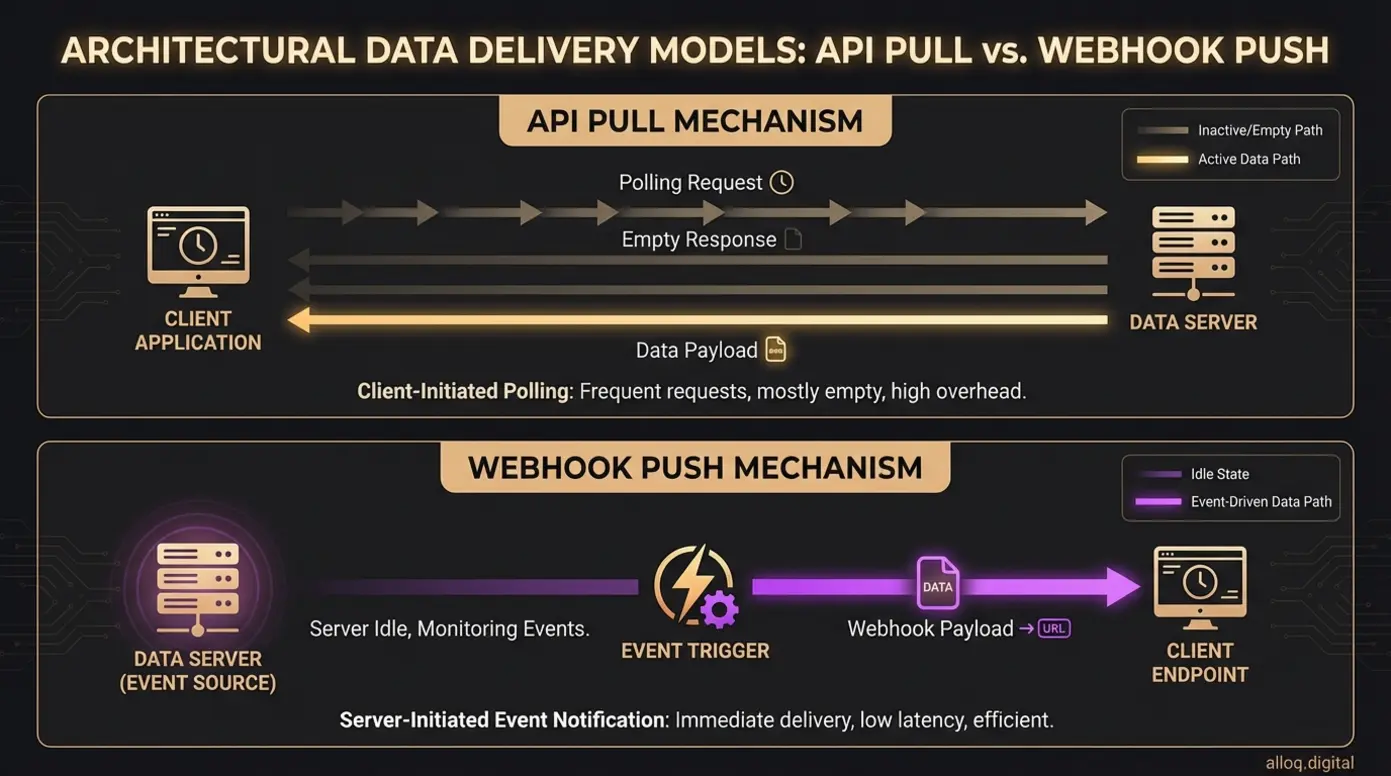 Understanding the fundamental architectural difference between inefficient constant API polling and immediate event-driven webhook pushes.
Understanding these distinct data flow models serves as a foundation for building scalable platforms. For a broader look at designing resilient backends, review these SaaS architecture fundamentals. Event-driven designs often reduce infrastructure costs because your local servers sit idle instead of processing thousands of empty, repetitive polling requests.
Practical Implementation: Building a Secure Webhook Listener
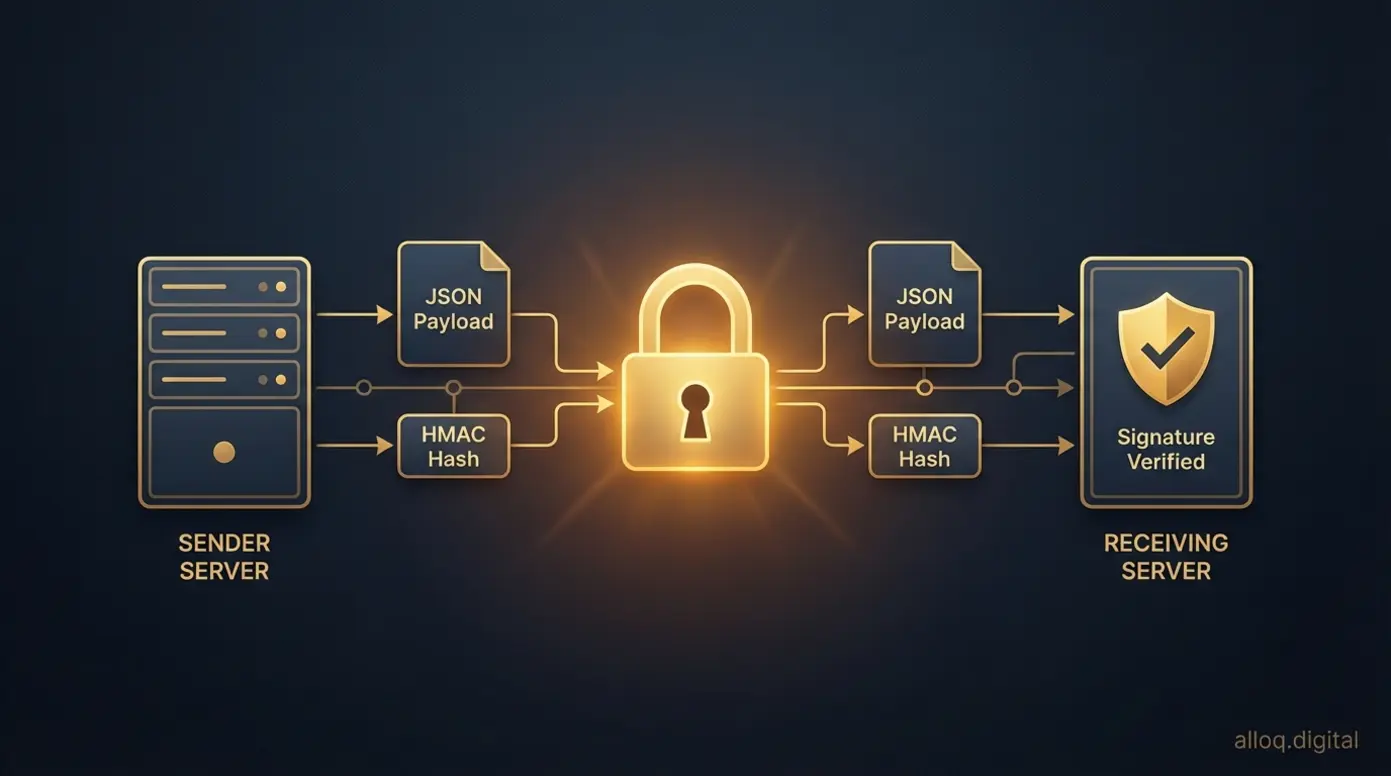 Securing your webhook endpoints requires validating incoming JSON payloads using cryptographic HMAC signatures to prevent spoofing.
Setting up a listener requires much more than just exposing an open endpoint to the public internet. You need specific validation steps to ensure incoming JSON payloads actually originate from the trusted external source. Without proper verification checks, malicious actors can easily spoof events and manipulate your production database.
Security typically starts with HMAC (Hash-Based Message Authentication Code) signatures. The sender signs the data payload using a shared secret key, and your receiving server recalculates this exact signature upon receipt. According to the official documentation on webhook best practices regarding payload verification, developers should always use constant-time string comparisons to prevent sophisticated timing attacks.
For visual learners wanting to understand endpoint configuration, watch this comprehensive tutorial covering a visual walkthrough of setting up endpoints. Managing these Day 2 operational details correctly separates amateur hobby projects from true enterprise-grade systems. If your engineering team needs help architecting secure endpoints, exploring custom API and SaaS development often yields excellent technical results.
Real-Time Communication Protocols Comparison
Moving past standard configurations, architects frequently compare APIs and webhooks against modern streaming protocols. What happens when your application needs continuous, bidirectional data flow rather than simple one-off alerts?
Webhooks vs WebSockets: Continuous vs Fire-and-Forget
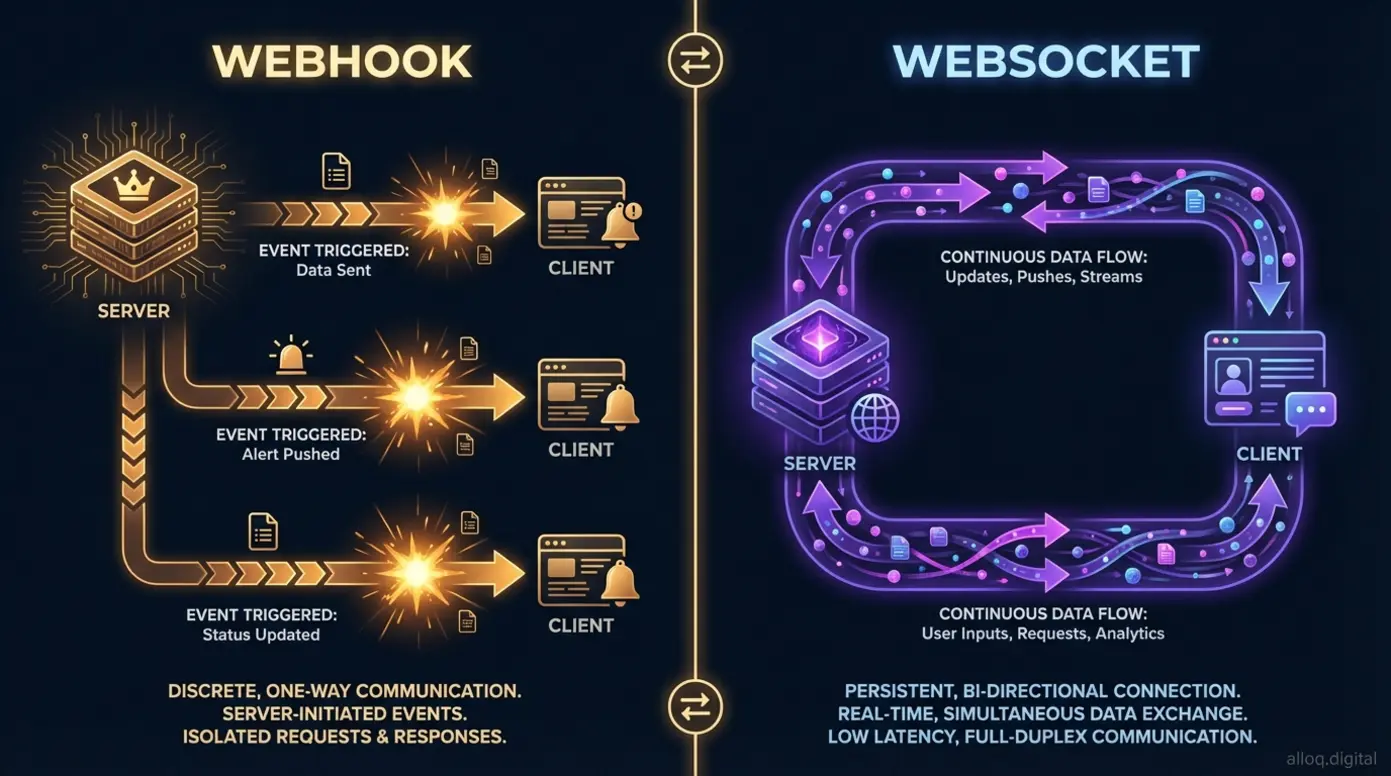 While webhooks provide discrete event notifications, WebSockets establish a continuous, bi-directional tunnel for real-time streaming.
Event-listeners excel at sparse, unpredictable updates (like a daily summary email trigger). They operate as stateless, fire-and-forget HTTP requests across the network. Once the receiving server acknowledges the payload with a standard 200 OK status, the transaction completely ends.
WebSockets establish a persistent, stateful connection between the client device and the server. This dedicated tunnel allows data to flow freely in both directions without the overhead of establishing a brand-new HTTP connection every single time a message sends.
| Feature | API Pull Mechanism | Event-Driven Webhook | WebSocket Connection |
|---|---|---|---|
| Directionality | One-way (Client to Server) | One-way (Server to Client) | Bi-directional |
| Statefulness | Stateless | Stateless | Stateful |
| Speed | Dependent on polling frequency | Immediate upon event trigger | Real-time continuous |
Streaming Alternatives: Server-Sent Events (SSE) and Kafka
Not every application requires the heavy lifting of a fully persistent WebSocket connection. Server-Sent Events (SSE) provide a lightweight, efficient alternative when you only need one-way data streaming from the server directly to the client interface. Cloudflare’s technical documentation outlines guidelines on streaming responses using Server-Sent Events clearly.
For massive enterprise systems dealing with millions of concurrent events, tools like Apache Kafka replace simple HTTP triggers entirely. Kafka relies on a distributed publish-subscribe model, where individual services read from ordered event logs at their own pace. This architecture helps prevent data loss even if a consuming service goes down for several hours. When setting up real-time database subscriptions, evaluating these advanced streaming protocols helps manage long-term infrastructure costs.
Designing for Reliability: Retries and Idempotency
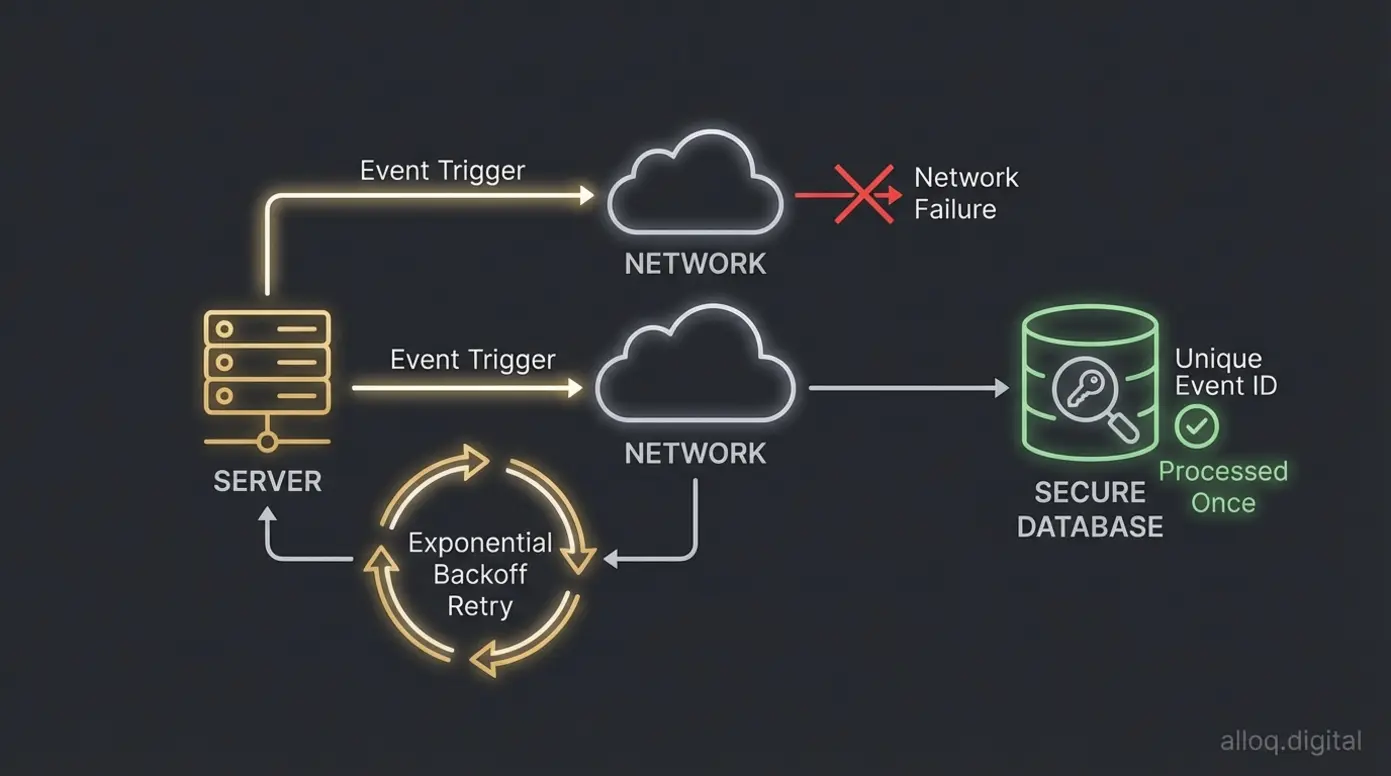 Implementing exponential backoff retries and unique idempotency keys prevents duplicate processing when webhook deliveries temporarily fail.
The biggest operational headache with event-driven architectures involves strict delivery guarantees. Networks drop connection packets, target servers restart unexpectedly, and database locks frequently cause timeouts. When a push notification fails to deliver, the sending system usually employs an exponential backoff strategy, retrying the delivery at gradually increasing intervals.
This automatic retry mechanism introduces the serious risk of duplicate processing. If your system receives the exact same payment notification twice, you should ensure it does not charge the customer’s credit card twice. Shopify Dev Docs suggest implementing idempotency in webhooks by checking unique event IDs provided in the payload header.
By storing these unique identifiers securely in your database, your application can quickly check if it has already processed a specific event. Building this critical safety layer into your real-time automated service integration prevents severe state corruption.
Advanced API Architectures & Alternatives
Moving beyond a standard webhook vs api implementation, developers face difficult choices regarding the exact structure of their request endpoints. How do you give frontend developers exactly the data they need without over-fetching massively large JSON payloads?
Moving Beyond Standard REST: GraphQL and FastAPI
Traditional REST architectures lock developers into receiving predefined, rigid data structures. If you request a user profile endpoint, you might receive their entire account history, even if you only needed their primary email address. This rigid structure forces frontend applications to process heavy, unnecessary data payloads on weak mobile networks.
GraphQL addresses this bottleneck by allowing clients to specify exactly which individual fields they want in their query request. The server returns a highly tailored JSON response, reducing bandwidth usage significantly on consumer devices. Meanwhile, modern Python frameworks like FastAPI use type hinting to automatically generate interactive documentation and validate incoming data schemas, speeding up the backend development process.
The Ultimate Architect’s Decision Matrix
Choosing the right communication protocol depends entirely on your specific system constraints and core product requirements. Teams often waste valuable weeks building complex event listeners when a simple scheduled polling script would have sufficed for their internal administrative tooling.
See the decision tree diagram below to guide your architectural choices.
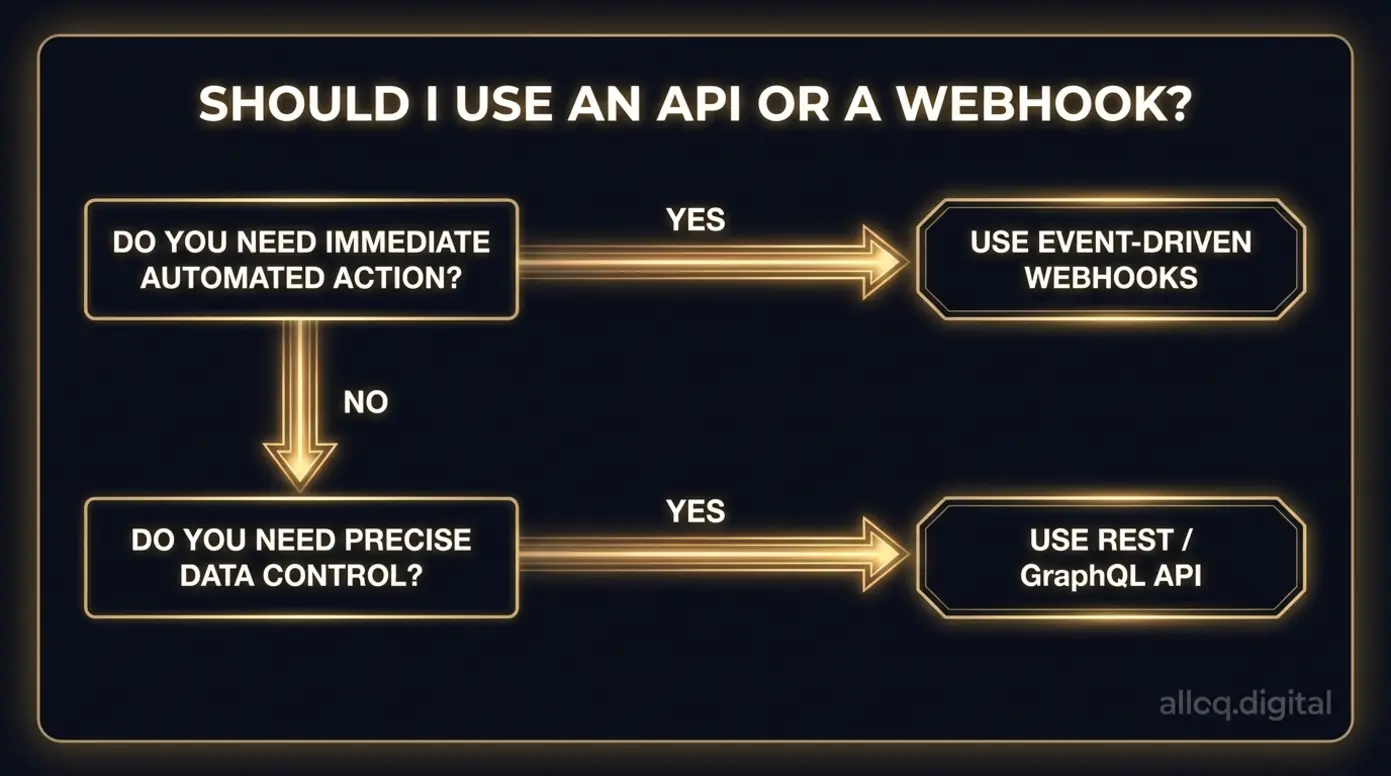 Use this architectural decision matrix to determine whether standard pull APIs or event-driven webhooks suit your project.
If your application requires immediate automated action based on third-party system changes, rely on event-driven push mechanisms. AsyncAPI details how publish and subscribe semantics handle these asynchronous technical workflows effectively. For standard internal operations where your application actively controls the exact timing, stick to reliable HTTP request models.
Modern digital platforms frequently use a hybrid approach to maintain system stability. They receive initial lightweight event alerts via push payloads, then use standard pull requests to fetch the complete, verified dataset securely. Mastering this architectural balance is essential for reliable API workflow automation. Partnering with engineering specialists for custom API and workflow integrations often accelerates this level of technical maturity.
Limitations, Alternatives, and Professional Guidance
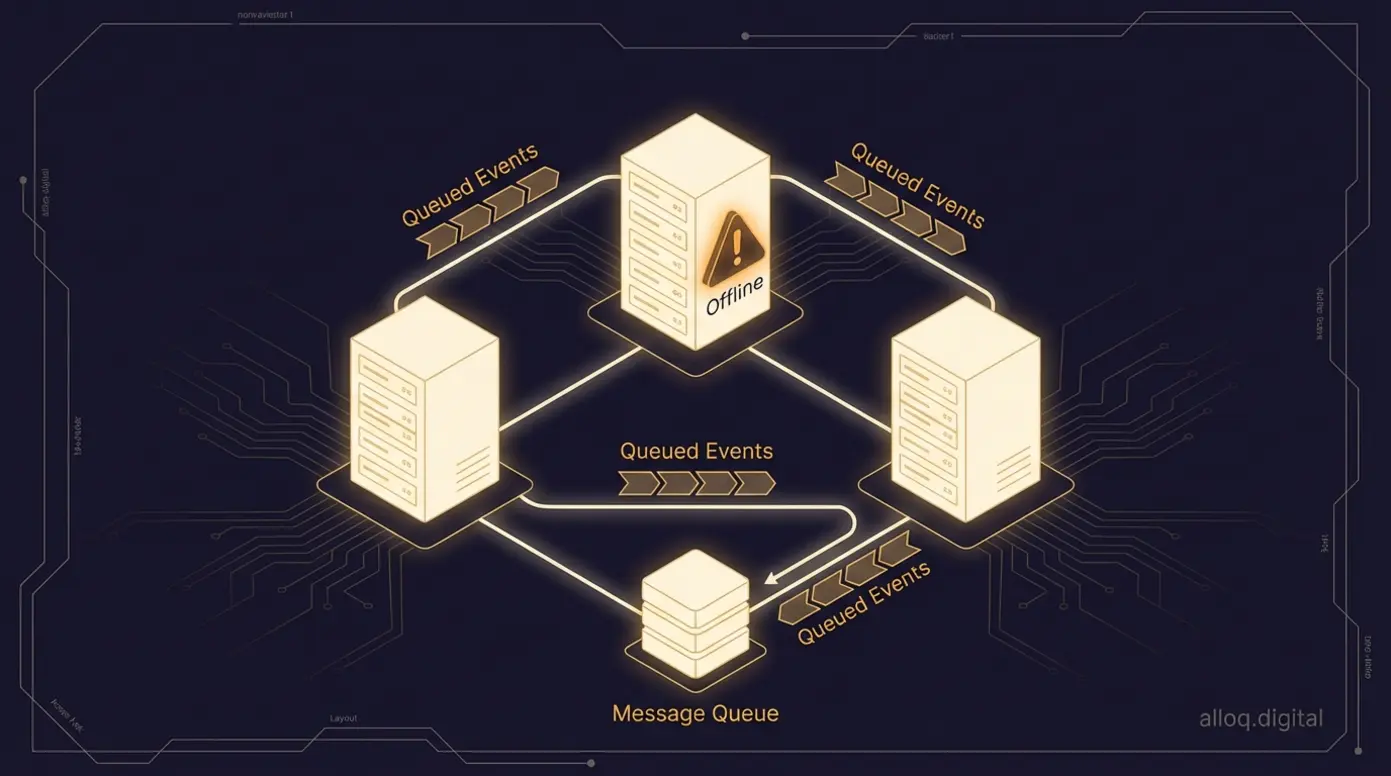 Robust architectures must account for dropped event payloads by implementing reliable message queues and backup storage layers.
While event-driven push mechanisms offer significant performance benefits, they introduce distinct architectural challenges that teams must recognize. Dropped payload events pose a severe risk if your receiving server goes offline temporarily for maintenance. Unlike standard pull requests where the client knows the data transfer failed and simply tries the request again, a missed event payload might disappear entirely without strict retry policies configured on the sender’s side.
This fire-and-forget nature means you must design your database schemas to handle duplicate events gracefully. Without proper idempotency keys, an automated retry might trigger a business action twice.
If you experience any of the following complex technical conditions, consult a certified systems architect or full-stack developer:
- Designing enterprise-scale financial payment architectures
- Migrating legacy polling systems to event-driven models
- Handling high-volume streaming data across multiple microservices
For edge cases where internal network infrastructure restricts incoming connections entirely, long-polling offers a viable alternative. This specific method keeps a standard connection open until the server has new data to send. For applications requiring constant, bidirectional data flow (like live chat platforms), WebSockets generally serve your needs much better than one-way event triggers.
Frequently Asked Questions
Is a webhook just an API?
No, they operate on entirely different architectural models. An API uses a request-response pull model where the client actively asks for data. A webhook functions via an event-driven push model, sending data automatically when triggered. This structural difference means standard interfaces require constant polling, while event listeners sit completely idle until a specific action activates them.
When to not use webhooks?
Avoid event-driven push mechanisms when you need on-demand data retrieval, complex multi-step synchronous operations, or direct data modification capabilities. Standard polling or REST interfaces often prove safer for these scenarios because they give the client complete control over the exact timing and precise shape of the requested data payload.
What is a real life example of a webhook?
An automated payment success notification from Stripe serves as a classic example. Instead of your server constantly asking the processor if an invoice is paid, the system actively pushes a JSON payload to your designated URL the moment the transaction clears. This operates exactly like receiving a text message when your restaurant table becomes available.
Conclusion
In the end, the webhook vs api discussion centers heavily on how your architecture manages server resource usage and data timing. Event-driven push mechanisms eliminate the severe inefficiencies of constant server polling by delivering crucial information exactly when it matters. Conversely, standard pull requests offer necessary execution control for direct data manipulation and precise on-demand queries.
Knowing the theoretical differences represents just the first conceptual step in modern systems engineering. Building secure, idempotent listeners and resilient polling mechanisms requires deep technical discipline and consistent error handling.
If your current backend struggles under heavy polling loads, take action today. Audit your existing architecture, identify specific services suitable for event-driven updates, and consider consulting with experienced technical partners to design highly reliable automated workflows.